Why Training Fast Twitch Muscle Fibres Matters as You Age

Why Training Fast Twitch Muscle Fibres Matters as You Age

Unlocking the Power of Fast Twitch Muscle Fibres:

Why Training Fast-twitch Muscle Fibres Matters as You Age

Ever wonder why some people seem to effortlessly maintain their strength and agility as they age, while others struggle to keep up? The answer could lie in the type of muscle fibres they have been training. Fast-twitch muscle fibres are crucial for explosive movements and quick reactions, making them essential for staying active and independent as you age. In this blog, I’ll explore the importance of training fast-twitch muscle fibres and how you can incorporate specific exercises into your workout routine to maximize their benefits.
Fast-twitch muscle fibres generate short bursts of power and speed. As we age, these fibres tend to atrophy faster than slow-twitch fibres, leading to a decline in strength and muscle mass.
But we have control over this!

By training fast-twitch muscle fibres through explosive movements and high-intensity exercises, you can stimulate their growth and improve your overall physical performance.

Incorporate exercises like:

  • Sprints
  • Plyometrics – think jump squats
  • Strength training 🥳

These exercises can help you maintain and enhance your fast-twitch muscle fibres as you age.

In addition to improving muscle strength and power, training your fast-twitch muscle fibres can also positively impact metabolism.

These fibres have a higher energy expenditure than slow-twitch fibres, meaning that by increasing the proportion of fast-twitch fibres in your muscle tissue, you can boost your calorie burn and improve your metabolic rate.

Aside from the physical benefits, training fast-twitch muscle fibres can also enhance cognitive function and overall well-being because FT muscle fibres are closely linked to the brain’s motor cortex, which controls movement and coordination.

Challenging these fibres through complex and dynamic exercises can enhance your mind-muscle connection and improve your reaction time and coordination. This can have a cascading effect on other aspects of your life, increasing your confidence, mood, and overall quality of life as you age.

To effectively train your fast-twitch muscle fibres, it’s crucial to incorporate a variety of exercises into your workout routine that target different muscle groups and movement patterns.

This can include a mix of strength training, explosive movements, and agility drills to challenge your muscles in new and dynamic ways.

It’s also essential to prioritize recovery and rest between intense workouts, allowing your muscles to repair and grow stronger. By adopting a balanced and varied approach to training, you can maximize the benefits of fast-twitch muscle fibre stimulation and enhance your physical and mental performance as you age.

Training fast-twitch muscle fibres is not just about improving your physical strength and performance—it’s about unlocking your body’s full potential and maintaining vitality and independence as you age.

I think I speak for all of us, aging strong, agile, and vibrant is a priority, which is precisely why I started Over Fifty Fitness. Check us out and grab your free 14-day trial.
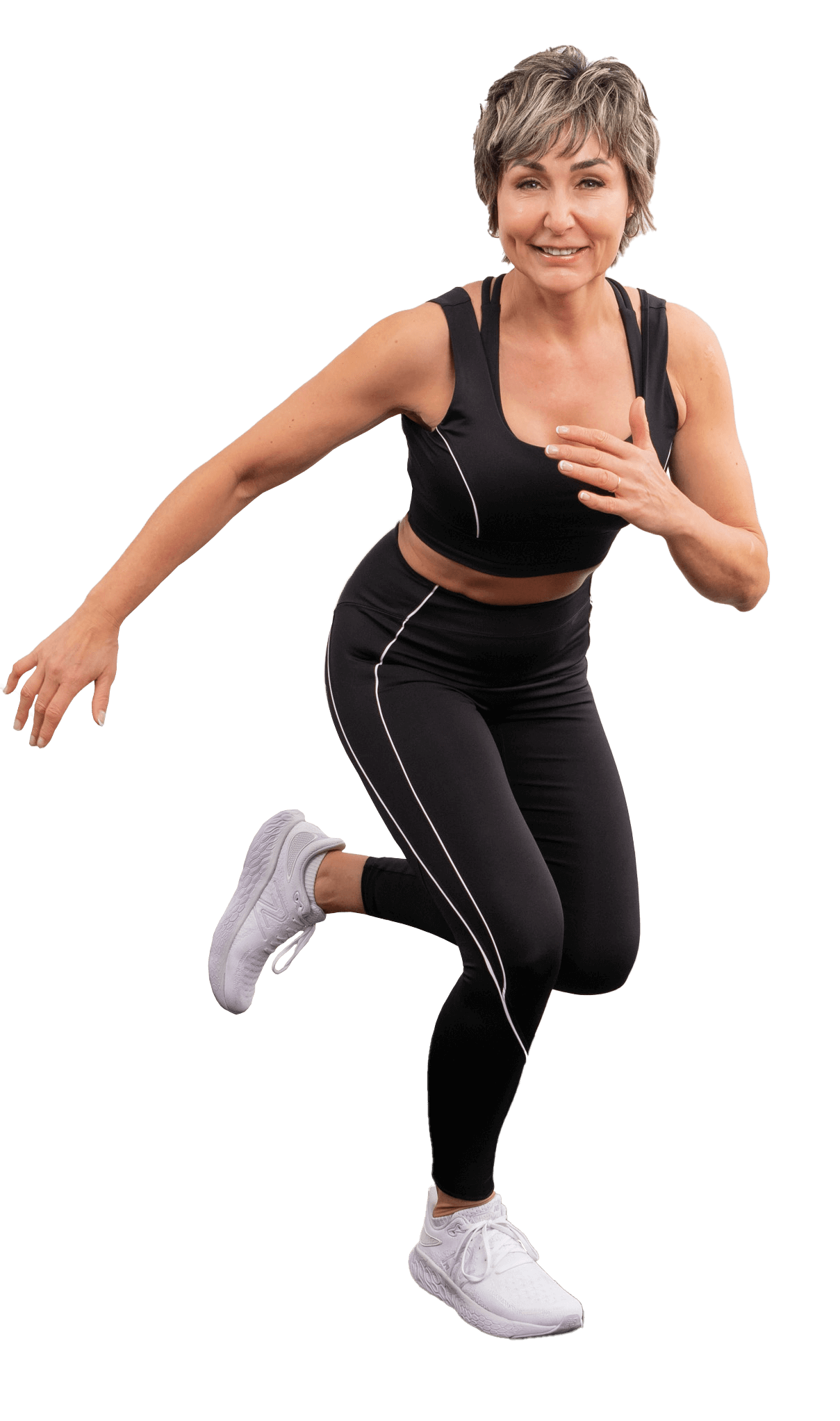
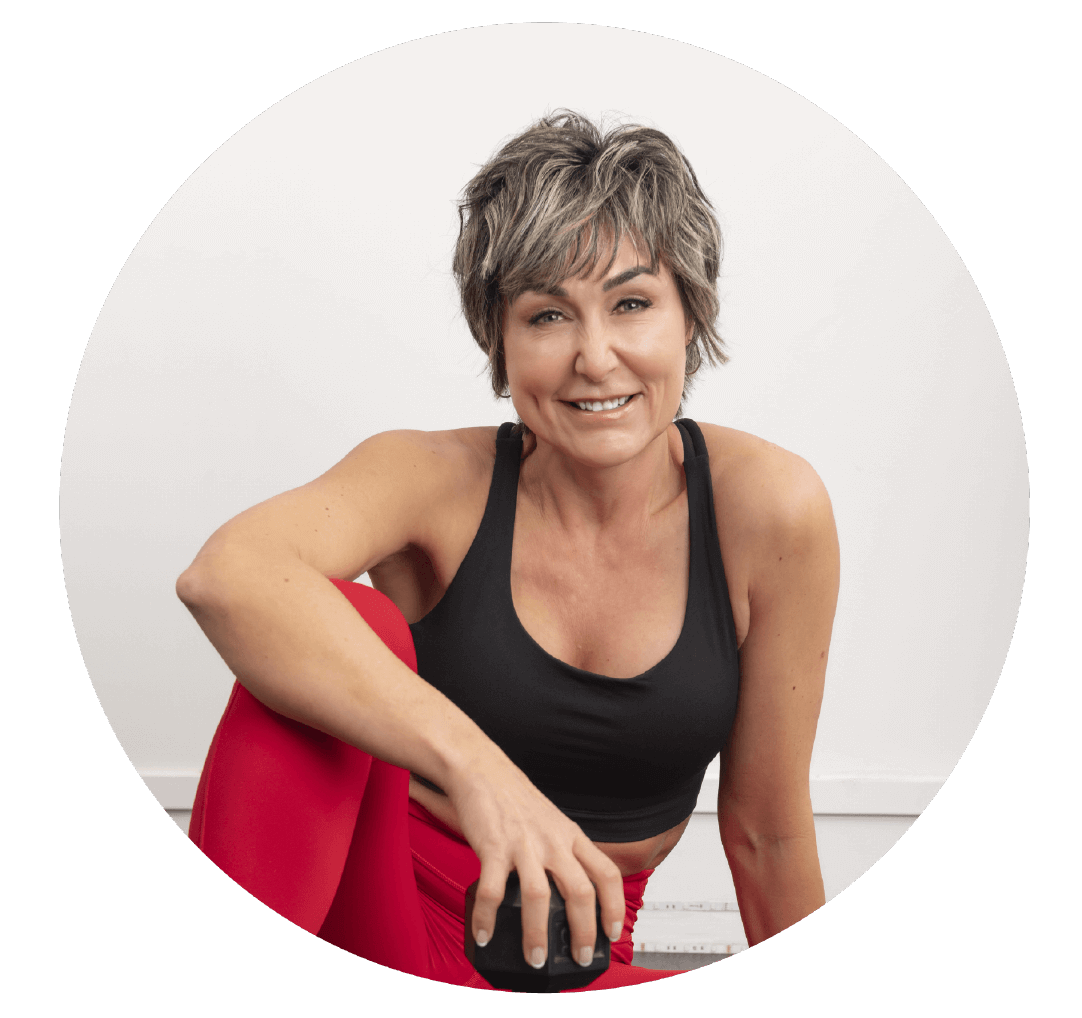
Hi, I’m PJ Wren.

I’ve been working with people of all ages, all fitness abilities, and varying fitness goals for over two decades.

I’ve helped thousands of women over the years who are just like you, feel more energized, stronger, and more confident in their bodies. I turn gym goers and non-believers of getting fit at home into believers, with at-home workouts that will give you the results you want, no gym equipment or crazy diet required!

I’m passionate about women over 40 because I am over 40 myself.

I know what it feels like to be middle-aged, and what it’s like to have a hot flash while looking for my bloody reading glasses.

I’m honoured you choose me, in the HUGE ocean of fitness professionals, to help you get fit, get strong and get fierce.

I promise to only give it to ya straight while listening to what you want, and what you need.

ox PJ

Why TRX Is the Ultimate Bodyweight Workout

Why TRX Is the Ultimate Bodyweight Workout

Suspension Success:

Why TRX Is the Ultimate Bodyweight Workout

Other than dumbbells, my other favourite piece of training equipment is the TRX. If you are unfamiliar with the TRX, it’s a suspension trainer that uses your body weight as the resistance. The straps on the trainer act as resistance against the user’s body weight. The training revolves around seven basic compound movements: push, pull, plank, rotate, hinge, lunge and squat. These movements can, in turn, be developed into many workout options. TRX is short for Total Body Resistance Exercise, and it was invented by a Navy SEAL, Randy Hetrick. He developed this tool because he wanted a way to stay in shape while on duty. He created the first prototype using an old Jiu-Jitsu belt and a few parts from a parachute harness repair kit. Since then, the TRX has taken the fitness world by storm, combining strength, balance, and flexibility in a straightforward design. I’ve been using it since it launched in 2004, and I even took a workshop with Randy in 2010. I love it and have incorporated it into weekly training routines for myself and my clients for over 20 years.
But should you buy one?
Here’s my pros and cons cheat sheet:

Pros:

  • Great for building core strength
  • Great muscle endurance & strengthEliminates some of the up and down exercises that dumbbell exercises require:
    Example: you can perform a chest press standing with a TRX, whereas, with dumbbells, you must be supine
  • Provides variety for your workout
  • Portable
  • Allows your muscles to undergo more time under tension (TUT) during your workout
  • Improves balance and joint stability
  • Provides a functional workout because it trains multiple muscles instead of just one body part
Cons:
  • Anchoring it. Through the years, I have tried using a door attachment, as well as anchoring to a wall and then hanging on a support beam. Hanging from a beam has been, hands down, the best way to train with it.
  • Learning curve
  • Adjusting the straps. Many of the exercises require different lengths, making this a tedious task when you’re training (however, this video will teach you how to adjust it like a pro!).
  • It is hard to increase your strength with it continuously. Because it is bodyweight only if hypertrophy is your goal, a TRX isn’t your best bet.
This TRX one is my recommended pick for home use. Let me know if you have one or decide to get one!

Hi, I’m PJ Wren.

I’ve been working with people of all ages, all fitness abilities, and varying fitness goals for over two decades.

I’ve helped thousands of women over the years who are just like you, feel more energized, stronger, and more confident in their bodies. I turn gym goers and non-believers of getting fit at home into believers, with at-home workouts that will give you the results you want, no gym equipment or crazy diet required!

I’m passionate about women over 40 because I am over 40 myself.

I know what it feels like to be middle-aged, and what it’s like to have a hot flash while looking for my bloody reading glasses.

I’m honoured you choose me, in the HUGE ocean of fitness professionals, to help you get fit, get strong and get fierce.

I promise to only give it to ya straight while listening to what you want, and what you need.

ox PJ

The Surprising Longevity Benefits of Weight Training

The Surprising Longevity Benefits of Weight Training

Live to Lift:

The Surprising Longevity Benefits of Weight Training

I’m a big fan of Medscape Medical News‘ emails.

What I love about them is that their articles are super concise and straight to the point. But what really gets me is their witty subject lines. I mean, seriously, take their December newsletter, for example: “Christmas: A Time for Love and… Penile Fractures.”

Talk about grabbing your attention!

Let’s be honest, I couldn’t resist clicking on it (and guys, if you hear a snap during sex, please head to the ER – ASAP).

After reading that study, I found another one that caught my attention: “How Strength Training Can Extend Your Lifespan.

Imagine if a strength training routine could be turned into a face cream – it would be the ultimate anti-aging secret for women.

While we all want to live longer, it’s really about how we live those extra years that truly matter.

BECAUSE WE CAN NOW LIVE LONGER.

But, I ask you, what good are those extra years if you don’t have the strength, fitness and health to enjoy the things you love to do? (FYI: I ‘stole’ this from my website Over Fifty Fitness.)

Here are some cool stats to geek out over from a 2022 study review:

Muscle-strengthening activities were linked to a 15% lower risk of dying during the time frames in which all the studies reviewed were conducted.
Resistance exercise was also linked to a lower risk of cardiovascular disease (17%), cancer (12%), and diabetes (17%).

Strength training can also reduce the signs and symptoms of many chronic conditions, such as arthritis, back pain, obesity, heart disease and depression.

And the great news? It’s never too late to start!

Noted on Science Daily, after doing a monitored strength training workout for 12 weeks, people over the age of 90 improved their strength, power and muscle mass.

And that was with just twice-a-week training.

Long and short, stronger men and women have a much lower risk of dying during a given period than people with less strength. They also have a better quality of life while they enjoy those extra years.

While controversy is rampant in the fitness arena, all professionals agree on this one thing – strength training leads to a lower risk of early death and will improve your quality of life.

End of story.

So, lucky for us, we all lift heavy sh*t on a weekly basis with our workouts.

Here’s to aging strong. 💪🏻 💪🏽 💪🏿

Hi, I’m PJ Wren.

I’ve been working with people of all ages, all fitness abilities, and varying fitness goals for over two decades.

I’ve helped thousands of women over the years who are just like you, feel more energized, stronger, and more confident in their bodies. I turn gym goers and non-believers of getting fit at home into believers, with at-home workouts that will give you the results you want, no gym equipment or crazy diet required!

I’m passionate about women over 40 because I am over 40 myself.

I know what it feels like to be middle-aged, and what it’s like to have a hot flash while looking for my bloody reading glasses.

I’m honoured you choose me, in the HUGE ocean of fitness professionals, to help you get fit, get strong and get fierce.

I promise to only give it to ya straight while listening to what you want, and what you need.

ox PJ

Kinetic Chain Made Easy: Open vs. Closed

Kinetic Chain Made Easy: Open vs. Closed

Kinetic Chain Made Easy: Open vs. Closed

What’s the Big Deal?

I would like to explain a few fitness terms that you may be unfamiliar with, but are crucial for designing effective workouts. By the end of this blog, you’ll have a crystal-clear understanding of the kinetic chain, the difference between open and closed-chain exercises, and when to use each in your workout routine.
Let’s start with the basics.

The kinetic chain refers to the interconnected series of joints and muscles in the body that work together to move. Think of it as a well-oiled machine, where each part relies on the others to function properly.

When one link in the chain is weak or dysfunctional, it can throw off the entire system, leading to compensation patterns, imbalances, and even injury.

The most common muscles in the body that can cause kinetic chain dysfunctions are:

  • Rectus abdominous
  • Multifidus
  • Gluteus maximus, gluteus minimus & gluteus medius
  • Latimus dorsi
  • Transverse abdominous
  • Internal obliques
So, how do you ensure your kinetic chain works in unison? 💁🏻‍♀️

With open and closed chain exercises.

Open chain exercises involve moving a specific body part through space without any fixed point of contact with the ground or other surfaces.

Examples include bicep curls, leg extensions, and shoulder presses.

These exercises are great for isolating and strengthening a particular muscle group, making them ideal for building muscle or rehabbing specific injuries.

They are also beneficial in improving your range of motion since there is no support to restrict your movement.

Our physiotherapist on Over Fifty Fitness uses many open-chained exercises for levels 1 and 2 of her programs. Check out our Prehab & Rehab Playlist here.

Rehab specialists love open-chain exercises because they are safer for people recovering from surgery and injuries. Conversely, closed-chain exercises involve having a fixed point of contact with the ground or another surface. This could be your hands, feet, or even your entire body. Examples include squats, planks, push-ups, and lunges. Closed-chain exercises are fantastic for improving overall strength, stability, and coordination. They require multiple muscle groups to work together in a coordinated manner.

By engaging multiple muscle groups and joints simultaneously, closed-chain exercises offer joint stability, increased muscle activation, and greater functional benefits.

When should you use open versus closed-chain exercises in your workout routine?
It all depends on your goals and what you’re trying to achieve. If you’re looking to bulk up specific muscles or target a particular weakness, incorporating more open-chain exercises can be beneficial. On the other hand, if you’re looking for functional strength, movement efficiency, and full-body engagement, closed-chain exercises should be your go-to choice. I recommend incorporating a mix of open- and closed-chain exercises into your workout routine, providing a well-rounded and balanced approach to your fitness program. So, mix up your workouts and have fun exploring the endless possibilities of the kinetic chain.

Related workouts

Hip Replacement Rehab Prehab
Knee Replacement Rehab Prehab
shoulder rehab prehab
Plantar Fasciitis Series Rehab Prehab
Knee Replacement Rehab Prehab
shoulder rehab prehab
Plantar Fasciitis Series Rehab Prehab
Knee Replacement Rehab Prehab

Hi, I’m PJ Wren.

I’ve been working with people of all ages, all fitness abilities, and varying fitness goals for over two decades.

I’ve helped thousands of women over the years who are just like you, feel more energized, stronger, and more confident in their bodies. I turn gym goers and non-believers of getting fit at home into believers, with at-home workouts that will give you the results you want, no gym equipment or crazy diet required!

I’m passionate about women over 40 because I am over 40 myself.

I know what it feels like to be middle-aged, and what it’s like to have a hot flash while looking for my bloody reading glasses.

I’m honoured you choose me, in the HUGE ocean of fitness professionals, to help you get fit, get strong and get fierce.

I promise to only give it to ya straight while listening to what you want, and what you need.

ox PJ

Heavy vs. Light Weights

Heavy vs. Light Weights

Heavy vs. Light Weights:

What New Research Really Says About Building Strength

In the fitness world, lifting heavy weights has long been the gold standard for muscle growth. However, new research is challenging this belief.

Scientists argue that lifting lighter weights can also lead to significant muscle growth, just as lifting heavier weights can.

Recent studies, including a 2020 review on PubMed, found that both low-load (30-60% of one-rep max) and moderate to high-load training (60%+ of one-rep max) can result in similar muscle growth when taken to the point of muscle failure.

Researchers at McMaster University have also advocated this approach for over a decade. They have shown that lifting lighter weights to exhaustion, even 20 to 30 reps or more, can lead to significant gains in muscle size.

After studying the most popular variables among resistance training programs—how much weight is lifted, how often, and how many times—the kinesiologists at McMaster University have found that all forms of resistance training are beneficial, including body-weight exercises such as planks, lunges, and push-ups.

They suggest you can build as much muscle mass by pushing lighter weights to fatigue as you do by straining under heavier loads.
Our Over Fifty Fitness Barre and Pilates lovers can attest to this as well. Light weight, high reps and tons of burn.

The key is volume and lifting to fatigue—making those last few reps count so you squeeze out every ounce of effort from the target muscle group—with no cheating!

When it comes to stimulating muscle growth, the amount of exhaustion the tissue experiences matters more than the weight you move. This is great news for women over 40 who work out at home. Now, we can focus on using weights that are best suited for our grip strength and continue to achieve results with our dumbbells at home.
However, let me emphasize that this research does not imply that a pair of 5-pound dumbbells, performed at twelve reps, will create muscle mass.

Let’s use the formula that the researchers used in the PubMed review above.

My one-repetition maximum (1RM) for a squat is 186.7 pounds (I can lift 160 pounds for five reps, making 186.7 my 1RM). Thirty percent of my 1 RM squat is 56lb. This 30% is the lower end of the lifting protocol that the researchers found elicited the same muscle growth as 60+%.

So, this is great news for me.

Instead of going to a gym and using a squat rack to lift the 150-160 pounds needed for muscle growth, I can use my 30-pound dumbbells (one in each hand) at home and create the same muscle fatigue and growth.

So, if you’ve wondered, ” How will I keep seeing results?” Here’s your answer.

By adjusting your workout approach with this new information, you can continue to build those beautiful muscles.

Hi, I’m PJ Wren.

I’ve been working with people of all ages, all fitness abilities, and varying fitness goals for over two decades.

I’ve helped thousands of women over the years who are just like you, feel more energized, stronger, and more confident in their bodies. I turn gym goers and non-believers of getting fit at home into believers, with at-home workouts that will give you the results you want, no gym equipment or crazy diet required!

I’m passionate about women over 40 because I am over 40 myself.

I know what it feels like to be middle-aged, and what it’s like to have a hot flash while looking for my bloody reading glasses.

I’m honoured you choose me, in the HUGE ocean of fitness professionals, to help you get fit, get strong and get fierce.

I promise to only give it to ya straight while listening to what you want, and what you need.

ox PJ

10 Must-Know Fitness Terms Defined

10 Must-Know Fitness Terms Defined

Fitness Lingo 101: 10 Must-Know Terms Defined

My husband says I speak another language when I start talking about workouts. I don’t quite understand, though. All I said to him was that I started my workout with a Tabata, moved into a fun strength EMOM, and finished with an AMRAP. I mean, what didn’t he understand? 💁🏻‍♀️😂 If you’re unsure of some of the terminology thrown around in fitness, here are 10 commonly used terms in my workouts and a quick definition:

Interval training

Any training (strength or cardio) involving a series of high-intensity exercises interspersed with rest or lower-intensity training. For example, a walk/run program is an interval training program.

Tabata

High-intensity interval training featuring 20-second work intervals followed by 10-second recovery intervals for eight cycles.

EMOM

Acronym for ‘every minute on minute’. It’s a form of interval training with the goal of completing a certain number of reps of a particular exercise within 60 seconds, using whatever time remains in that minute for rest.

AMRAP

Acronym for ‘as many rounds/reps as possible’. In the most basic terms, AMRAP workouts involve picking an exercise (or series of exercises) and then completing as many repetitions or rounds of that pattern as possible in a set amount of time. Typically, that means you rest as little as possible. Try this fun AMRAP.

HIIT

Stands for high-intensity interval training and consists of short bursts of intense work followed by a quick recovery, then returning to the tough work. It’s important to note here that the high intensity can be subjective. What may be low intensity for one person may be high intensity for another.

Metabolic Conditioning (also known as Metcons)

Like HIIT, metabolic conditioning often refers to high-intensity exercise that utilizes strength-based exercises, body weight, or a combination of both. But metabolic conditioning is also an oxymoron. Because any type of muscle contraction makes your metabolism start the chemical process needed for energy, so in theory, standing up from your chair (which requires your metabolism to fuel your muscles to do so) could be called metabolic conditioning. In the fitness arena, however, a metcon is commonly defined as a workout that combines strength and cardio training—anaerobic and aerobic exercises.

Check out my popular 15-Day MetCon Program.

Power Training

We did a lot of power training in my last challenge, the Unstoppable Challenge Vol 2. I love using it in our workouts because power is something that diminishes with age, and power training also targets the fast-twitch muscle fibres, which shrink as we age. So what the heck is it? Power is the ability to exert the highest amount of force in the shortest time. While strength training involves the ability to overcome resistance, power training involves the ability to overcome that resistance in the shortest time possible. Think plyo push-ups, jump squats, power cleans, snatches, kettlebell swings, ball slams, and box jumps, to name a few.

Core Training

Let’s discuss core training versus an abdominal workout. When we say “core,” we’re referring to a whole bunch of muscles in your torso, not just your six-pack abs. Your core consists of around 20 muscles, including those famous abs. These muscles work together to keep your hips, shoulders, and spine stable, help you stand tall, and assist in various everyday movements, such as bending, twisting, and lifting.

Compound exercises

Any exercise that incorporates multiple muscle groups, like lunges, squats, chest presses, and rows. If there is more than one joint moving, then you are performing a compound exercise.

DOMS

DOMS stands for delayed onset muscle soreness, which is the soreness you feel the day or two after a hard workout. This happens because when you’re working out, you’re damaging muscle fibres (that’s a good thing!). The muscle then repairs and rebuilds, and that’s how you get stronger. The soreness and pain you feel from DOMS come from the chemicals that set off pain receptors during the repair process. This soreness may last anywhere from 24 to 72 hours after your workout.

Hi, I’m PJ Wren.

I’ve been working with people of all ages, all fitness abilities, and varying fitness goals for over two decades.

I’ve helped thousands of women over the years who are just like you, feel more energized, stronger, and more confident in their bodies. I turn gym goers and non-believers of getting fit at home into believers, with at-home workouts that will give you the results you want, no gym equipment or crazy diet required!

I’m passionate about women over 40 because I am over 40 myself.

I know what it feels like to be middle-aged, and what it’s like to have a hot flash while looking for my bloody reading glasses.

I’m honoured you choose me, in the HUGE ocean of fitness professionals, to help you get fit, get strong and get fierce.

I promise to only give it to ya straight while listening to what you want, and what you need.

ox PJ

Sign UpTo Receive Your 21 Day Fitness Program

Start receiving your personalized fitness program by entering your name, email, and answer 2 simple questions.

Do you currently work out?
Fitness Goal

WE HAVE LIFT OFF! Now, go head to your In Box to confirm your subscription so I can send you your first workout 👊🏼