Heavy vs. Light Weights:
What New Research Really Says About Building Strength
In the fitness world, lifting heavy weights has long been the gold standard for muscle growth. However, new research is challenging this belief.
Scientists argue that lifting lighter weights can also lead to significant muscle growth, just as lifting heavier weights can.
Recent studies, including a 2020 review on PubMed, found that both low-load (30-60% of one-rep max) and moderate to high-load training (60%+ of one-rep max) can result in similar muscle growth when taken to the point of muscle failure.
Researchers at McMaster University have also advocated this approach for over a decade. They have shown that lifting lighter weights to exhaustion, even 20 to 30 reps or more, can lead to significant gains in muscle size.
After studying the most popular variables among resistance training programs—how much weight is lifted, how often, and how many times—the kinesiologists at McMaster University have found that all forms of resistance training are beneficial, including body-weight exercises such as planks, lunges, and push-ups.
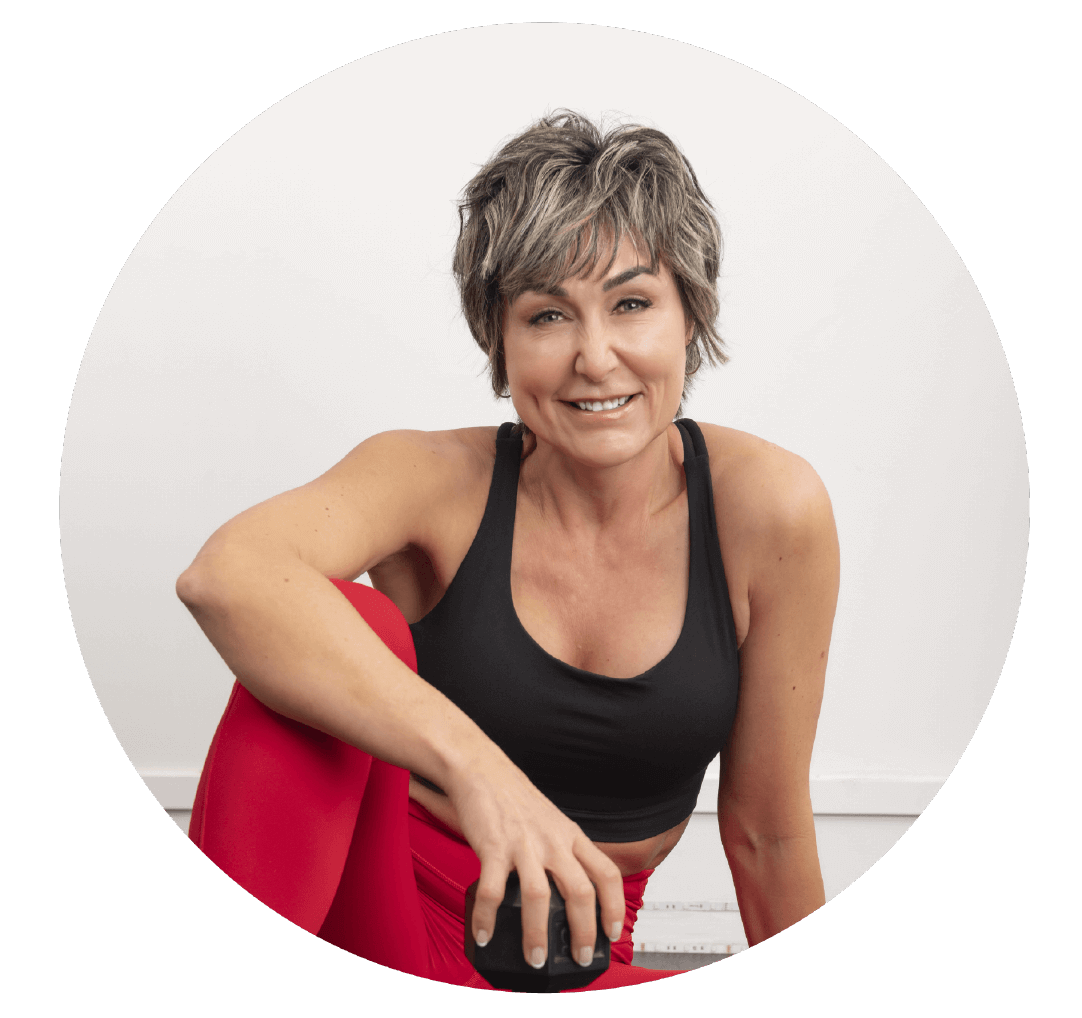
The key is volume and lifting to fatigue—making those last few reps count so you squeeze out every ounce of effort from the target muscle group—with no cheating!
When it comes to stimulating muscle growth, the amount of exhaustion the tissue experiences matters more than the weight you move. This is great news for women over 40 who work out at home. Now, we can focus on using weights that are best suited for our grip strength and continue to achieve results with our dumbbells at home.Let’s use the formula that the researchers used in the PubMed review above.
My one-repetition maximum (1RM) for a squat is 186.7 pounds (I can lift 160 pounds for five reps, making 186.7 my 1RM). Thirty percent of my 1 RM squat is 56lb. This 30% is the lower end of the lifting protocol that the researchers found elicited the same muscle growth as 60+%.
So, this is great news for me.
Instead of going to a gym and using a squat rack to lift the 150-160 pounds needed for muscle growth, I can use my 30-pound dumbbells (one in each hand) at home and create the same muscle fatigue and growth.
So, if you’ve wondered, ” How will I keep seeing results?” Here’s your answer.
By adjusting your workout approach with this new information, you can continue to build those beautiful muscles.
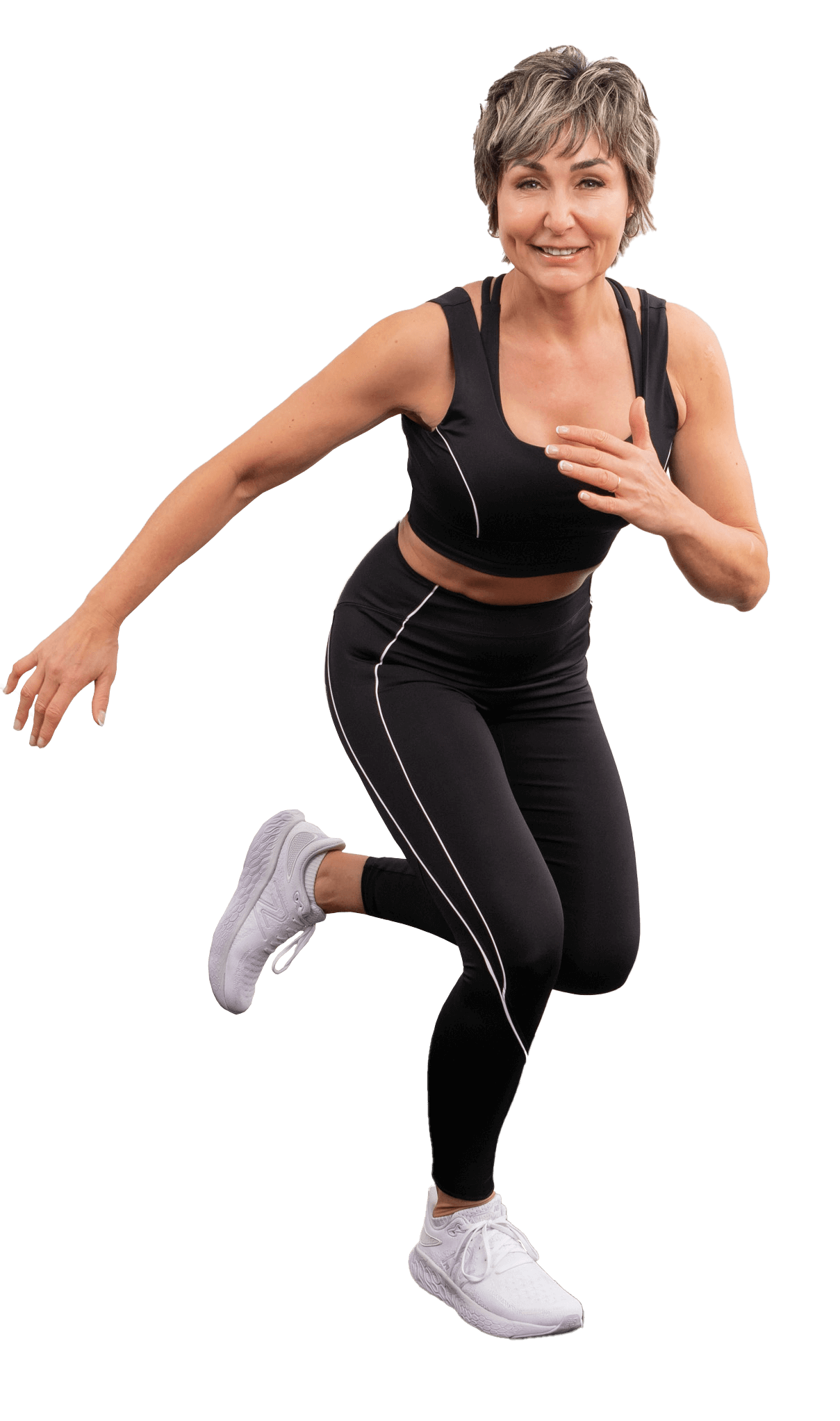
Hi, I’m PJ Wren.
I’ve been working with people of all ages, all fitness abilities, and varying fitness goals for over two decades.
I’ve helped thousands of women over the years who are just like you, feel more energized, stronger, and more confident in their bodies. I turn gym goers and non-believers of getting fit at home into believers, with at-home workouts that will give you the results you want, no gym equipment or crazy diet required!
I’m passionate about women over 40 because I am over 40 myself.
I know what it feels like to be middle-aged, and what it’s like to have a hot flash while looking for my bloody reading glasses.
I’m honoured you choose me, in the HUGE ocean of fitness professionals, to help you get fit, get strong and get fierce.
I promise to only give it to ya straight while listening to what you want, and what you need.
ox PJ